Why You Wake Up Tired and Inflamed: The Hidden Cortisol Rhythm Problem
Many patients who visit our functional medicine clinic for fatigue, brain fog, joint stiffness, anxiety, or poor sleep have already been told they have “adrenal fatigue.”
But what we see far more often is not adrenal failure.
It is a flattened cortisol rhythm.
And one of the most powerful drivers of this pattern is something most people never consider:
Light timing.
What Is a Flattened Cortisol Rhythm?
Cortisol is often called a stress hormone. But its primary role is circadian regulation. It’s a timing hormone.
In a healthy system:
Cortisol rises sharply 30–45 minutes after waking. This is called the Cortisol Awakening Response (CAR).
It gradually declines throughout the day.
It reaches its lowest point at night, allowing melatonin to rise.
That sharp morning peak plays several important roles:
Regulates inflammation
Mobilizes glucose appropriately
Improves focus and reaction time
Synchronizes peripheral clocks in the gut, liver, and immune cells
The amplitude of this curve matters more than total daily output.
When amplitude weakens, physiology destabilizes.
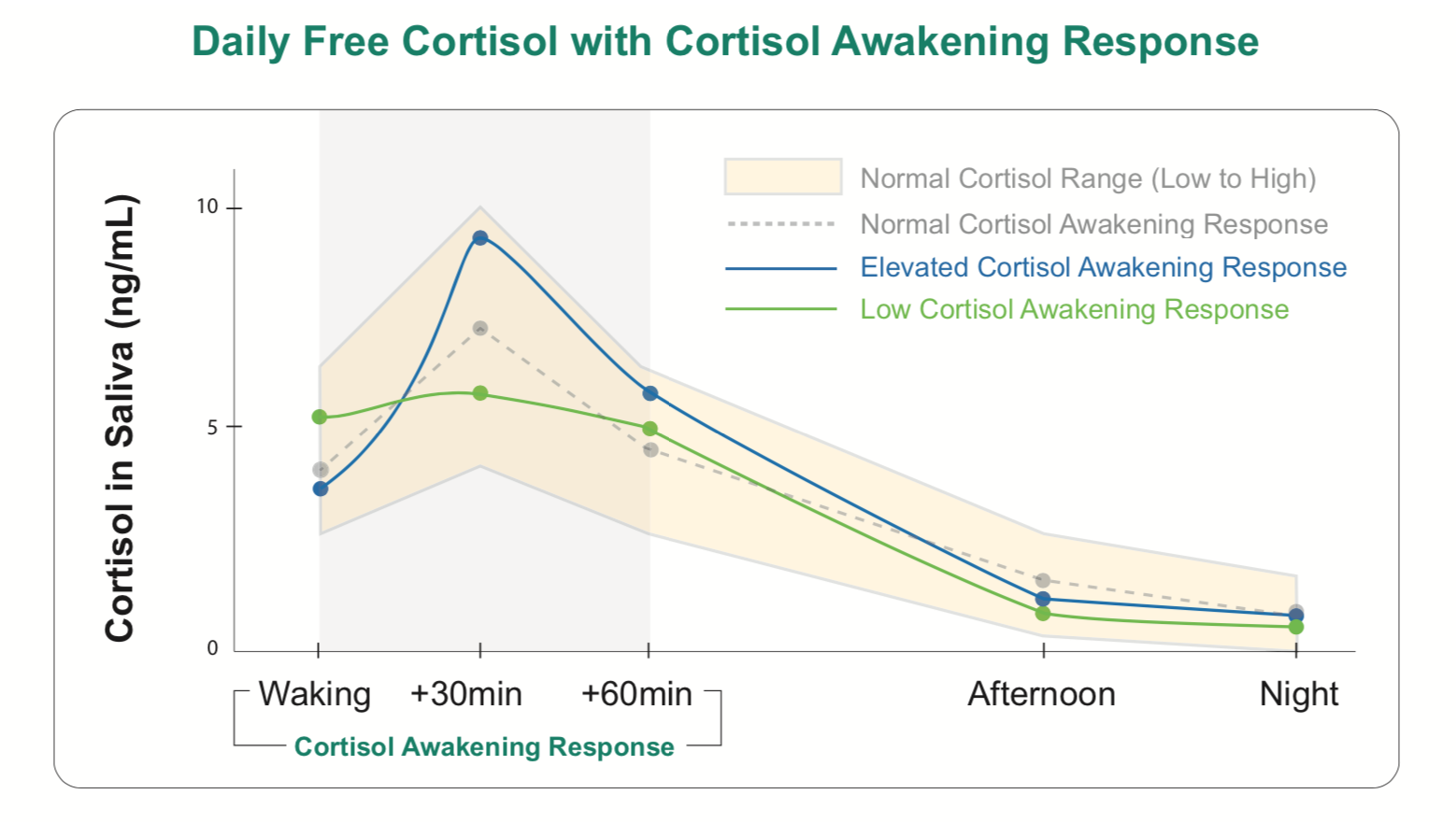
A healthy cortisol curve rises sharply in the morning and gradually declines through the day.
What Flattens Cortisol Rhythm?
Two common modern exposures drive this pattern:
Dim days.
Bright nights.
Dim Days: The Modern Hormone Disruptor
Indoor lighting typically measures 100 to 500 lux.
Outdoor morning light, even on an overcast day, often exceeds 5,000 to 10,000 lux and can be significantly higher in clear conditions.
The suprachiasmatic nucleus (SCN) is the brain’s master circadian pacemaker. It requires strong morning light input to anchor clock gene expression properly.
Insufficient morning light exposure has been shown to:
Reduce cortisol awakening response amplitude
Shift circadian phase later
Impair sleep quality
Increase inflammatory signaling
(Leproult & Van Cauter, 2011; Scheer et al., 2009; Wright et al., 2013)
Weak light input = weak hormonal amplitude.
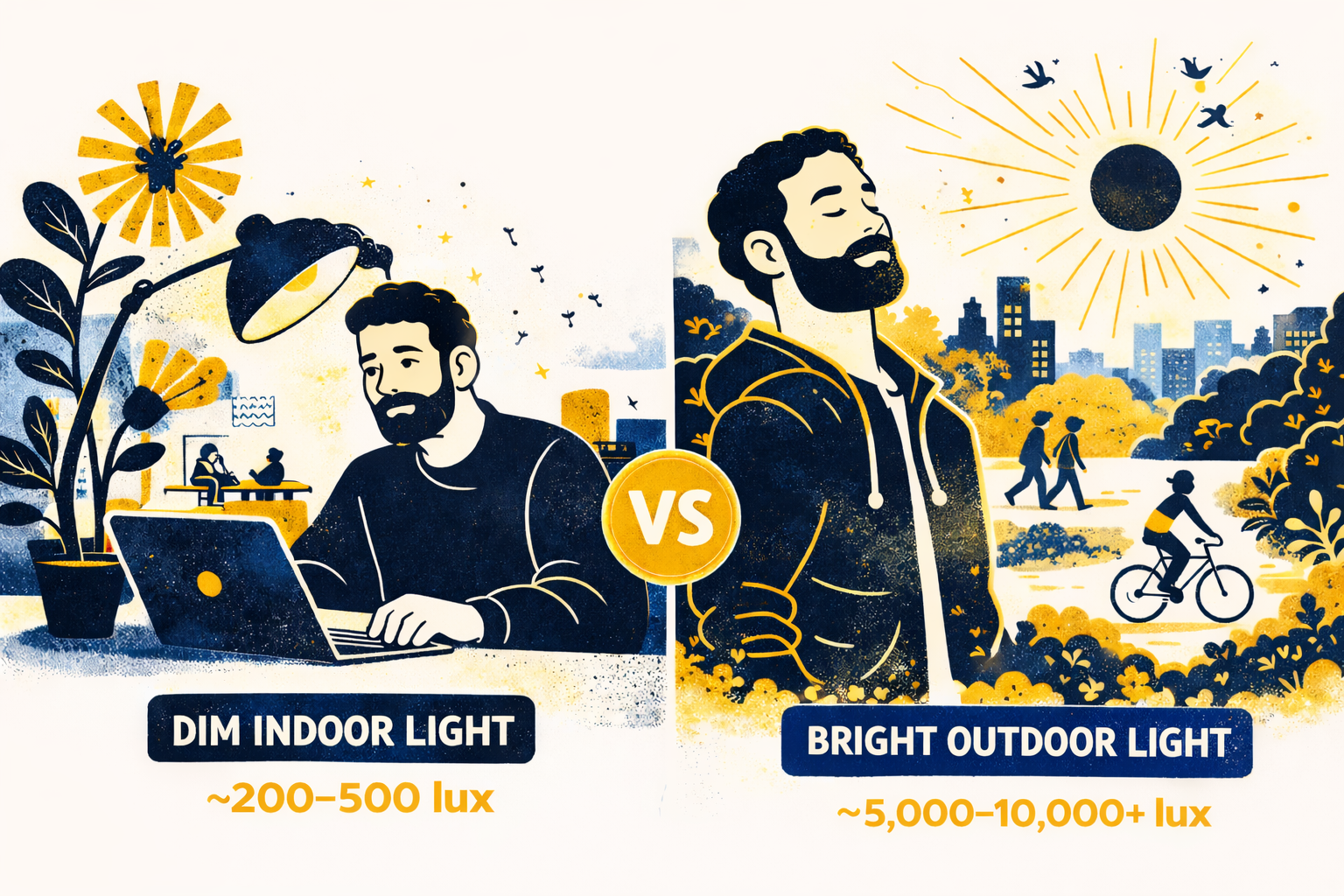
Outdoor morning light is exponentially brighter than indoor lighting, even on cloudy days.
Bright Nights: How Evening Light Disrupts Cortisol and Melatonin
Even relatively modest evening light can suppress melatonin and shift circadian timing.
Research shows:
Light exposure at night suppresses melatonin in a dose-dependent manner (Gooley et al., 2011)
Blue-enriched light strongly delays circadian phase (Chang et al., 2015)
Repeated nighttime light exposure blunts the next morning’s cortisol response (Scheer et al., 2009)
You do not need stadium lighting. Even ordinary household light can be enough to shift your circadian timing and blunt your natural hormone rhythm if exposure happens late in the evening.
Phone screens
Overhead LEDs
Television glow
Bathroom lights during the night
Over time, this creates a common clinical pattern:
Low morning drive
“Tired but wired” evenings
Joint stiffness
Elevated inflammatory markers
Brain fog
This is not adrenal collapse, it is circadian distortion.
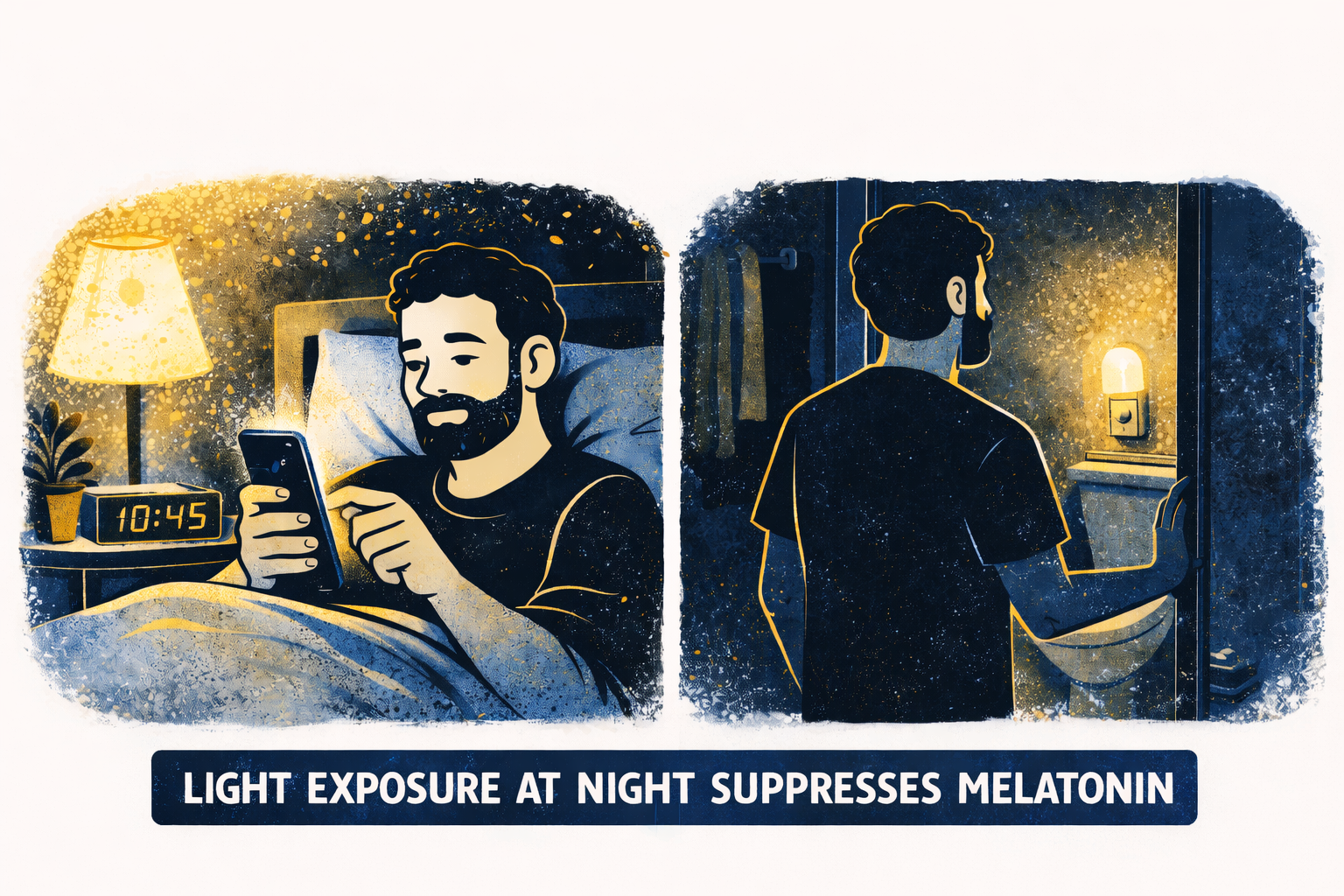
Even modest evening light can suppress melatonin and shift circadian timing.
Why Cortisol Rhythm Matters for Inflammation
Cortisol is one of the body’s primary anti-inflammatory regulators.
A strong morning peak helps suppress:
• IL-6 (a key inflammatory cytokine linked to fatigue and joint pain)
• TNF-α (a driver of systemic inflammation and autoimmune flares)
• NF-κB activity (a master switch that turns on inflammatory genes)
When the curve flattens:
Baseline inflammatory tone rises
Pain sensitivity increases
Autoimmune activity may flare
Gut barrier integrity may weaken
Even short-term circadian misalignment has been shown to increase inflammatory markers and impair glucose tolerance (Scheer et al., 2009).
Many people chase dietary triggers.
But sometimes the trigger is light timing.
A Clinical Example
A 44-year-old female presented with:
Persistent morning fatigue
Joint stiffness in her hands
Mildly elevated CRP
A clean anti-inflammatory diet
Normal total daily cortisol output
Her diurnal cortisol test revealed:
A blunted cortisol awakening response
A flat afternoon slope
Her history included:
Indoor mornings under dim kitchen lighting
Evening laptop work until 11:30 pm
Phone use in bed
Intervention:
15 to 20 minutes of outdoor light within 30 minutes of waking
10,000 lux morning light therapy during winter
Dim lighting after sunset
No screens 60 minutes before bed
Within six weeks:
Morning energy improved
Joint stiffness reduced
CRP normalized
Sleep depth improved
No new supplements were added. Once the light signal was corrected, the body’s physiology began to recalibrate and respond accordingly.
How to Restore a Healthy Cortisol Curve
-
Within 30 minutes of waking:
Get outside
Avoid sunglasses
10 to 20 minutes minimum
Longer if overcast
During darker seasons:
10,000 lux light therapy at eye level for 20 to 30 minutes
Still prioritize outdoor light when possible
The goal is to anchor amplitude early.
-
After sunset:
Dim overhead lights
Use warmer spectrum lighting
Reduce LED intensity
Lower screen brightness
Consider blue/green blocking lenses
Keep the bedroom fully dark
You are protecting melatonin and preserving next-morning cortisol amplitude.
-
Avoid late-night eating
Keep consistent sleep timing
Limit bright work environments late at night
Circadian systems respond to consistency.
Why This Matters Long-Term
Flattened diurnal cortisol rhythms have been associated with:
Increased cardiovascular risk (Kumari et al., 2011)
Higher mortality in some chronic illness populations (Sephton et al., 2000)
Metabolic dysfunction
Mood disorders
Circadian amplitude is not cosmetic, it is foundational physiology.
The Takeaway
If you wake up:
✔ Foggy
✔ Inflamed
✔ Unrefreshed
✔ Stiff
Before assuming your adrenals are failing, ask:
How bright are my days?
How bright are my nights?
Often the issue is not gland weakness, it’s rhythm distortion.
And rhythm is fixable.
FAQ: Cortisol, Light, and Morning Fatigue
-
Low morning energy, brain fog, stiffness on waking, feeling wired at night, poor stress tolerance, and unrefreshing sleep are common patterns patients often describe.
-
Light is one of the most powerful inputs to the brain’s master clock. That clock regulates cortisol, melatonin, immune signaling, glucose metabolism, and more. When morning light is insufficient and evening light is excessive, hormonal amplitude weakens. Over time, this can increase inflammatory tone and reduce resilience.
-
Not necessarily. Supplements can support physiology, but they cannot replace foundational signals. If light timing is disrupted, adding nutrients without correcting the signal often produces limited results. As the clinical example illustrates, restoring proper light exposure alone can significantly improve physiology. When the rhythm is reestablished, the body often responds without the need to escalate interventions.
-
We can assess diurnal cortisol patterns through functional testing, alongside sleep timing, metabolic markers, inflammatory indicators, and lifestyle factors. Context matters. A flattened rhythm is not diagnosed in isolation but interpreted within the whole clinical picture.
-
Yes. Seasonal light reduction makes morning cortisol amplitude more difficult to maintain and weakens circadian anchoring. Strategic outdoor exposure and structured 10,000 lux light therapy can be particularly helpful during darker months, especially in northern climates like Canada.
Interested in Assessing Your Rhythm?
At the clinic we can evaluate:
→ Diurnal cortisol pattern
→ Sleep timing
→ Light exposure behaviours
→ Inflammatory markers
→ Metabolic indicators
Sometimes the most powerful intervention isn’t another supplement, it’s restoring the signal your biology expects.

Disclaimer: This article is for educational purposes only and is not intended to replace individualized medical advice. Please consult your healthcare provider with any questions related to your health or a medical condition.