Menstrual Cycle & Fertility: What Your Period Is Telling You
Your cycle length, ovulation patterns, and period symptoms are real-time clues about your hormonal health and readiness to conceive.
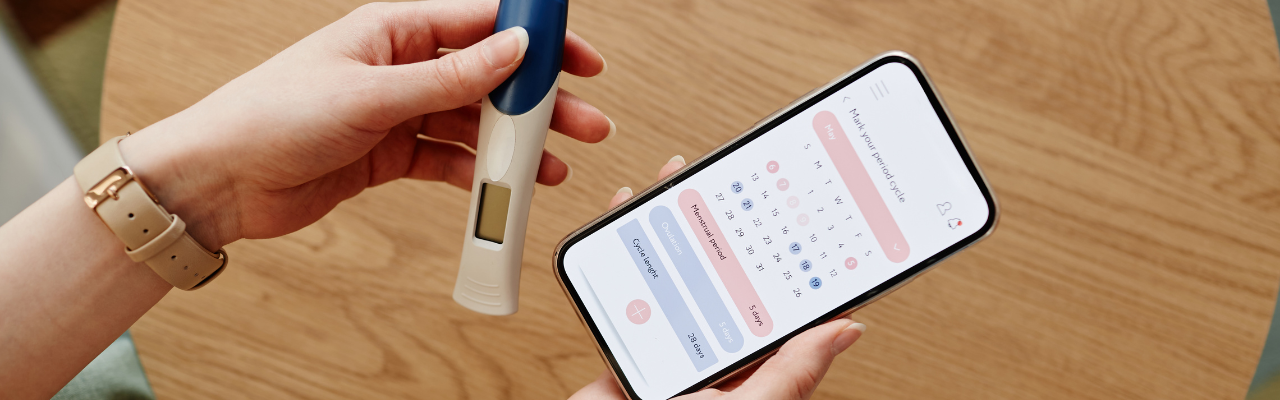
If you’re thinking about trying for a baby, or you’ve already started, one of the most important, and often overlooked, places to start is your menstrual cycle.
For years we’ve been taught to view our periods as just a monthly inconvenience. But what if you started using your menstrual cycle as a monthly report card for your hormonal health and fertility? Your menstrual cycle is considered a “vital sign” by the American College of Obstetricians and Gynecologists.
Your body is constantly giving you real-time clues every month from day 1 (the first day of your period) through ovulation, and all the way to the end of the luteal phase. In this post, we will decode that communication and discuss when your symptoms might indicate your body needs a little more support.
First: What Does a “Healthy” Cycle Look Like?
A healthy cycle is 21–35 days, includes consistent ovulation with cervical mucus changes, and involves manageable bleeding with minimal pain.
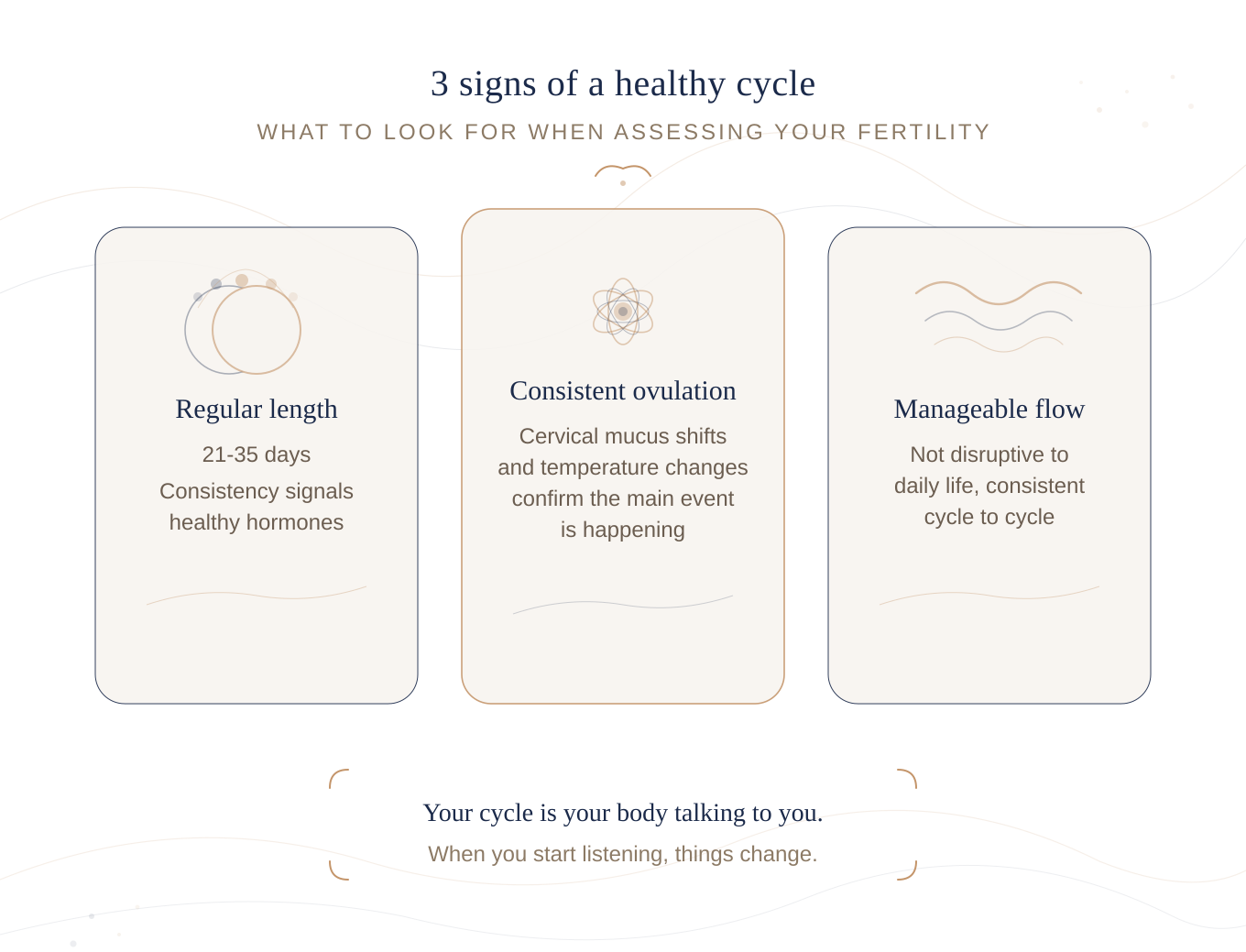
When we look at a cycle optimized for fertility, we’re looking for consistency and balance. A generally healthy cycle includes:
Regular Cycle Length: A regular timeframe often indicates that the follicular phase (when the egg is maturing) is progressing at a healthy, steady pace. Cycle length from 21-45 days, with most falling in the 21-35 day range, is normal.
Consistent Ovulation: The main event! Without ovulation, pregnancy is impossible. We should see noticeable shifts in cervical mucus (such as the presence of raw-egg-white-consistency mucus), indicating rising estrogen and an approaching fertile window. You can also track ovulation through basal body temperature and LH test strips.
Manageable Bleeding & Minimal Pain: A healthy period should not leave you bedridden or heavily reliant on painkillers. The flow should also be consistent from cycle to cycle.
Cycle Clues That May Impact Fertility
If your cycle doesn’t look exactly like the list above, don’t panic. Still, certain patterns can be linked to fertility challenges, but it’s worth seeing a certified healthcare practitioner to make sense of the entirety of your health.
1. Unpredictable or Missing Periods
If your cycle varies each month significantly or your periods are absent, it could signal ovulatory dysfunction,1,2 meaning ovulation is erratic or not occurring. Without ovulation, conception can’t happen.
When we have regular cycles, it’s a clue that our brain and ovaries are communicating properly through hypothalamic-pituitary-ovarian axis.
Some common causes include:
· Polycystic Ovary Syndrome (PCOS)
· Hypothalamic Amenorrhea (HA)
· Thyroid, pituitary, or adrenal imbalances
· Perimenopause (learn more about navigating this transition)
Inconsistent cycles can make it harder to time conception and may require further investigation.
2. Painful Periods
Severe menstrual pain is often normalized, but debilitating cramps that disrupt daily life (or pain unrelieved by over-the-counter medication) are red flags.
When your period begins, your body naturally releases pro-inflammatory cytokines and prostaglandins. These act as chemical messengers that help the uterus contract and shed its lining. While mild cramping and some discomfort can be a normal part of this process, severe pain is not.
Such symptoms may point to conditions like:
· Endometriosis: uterine tissue growing outside the uterus.
· Adenomyosis: tissue growing into uterine muscle.
· Uterine Fibroids: benign growths in the uterus.
These conditions involve inflammation and structural changes that can impact fertility.3 Endometriosis, for example, often goes undiagnosed for years. If your pain is severe, push for further investigation.
Why This Matters
Fertility often hinges on subtle details: hormone patterns, nutrient status, inflammation, and even metabolic health. If you feel like something is off, even if tests are “normal”, trust your instincts. Early evaluation can make a significant difference.
You don’t have to wait a year or reach a breaking point before seeking help. If you’re planning for a family or feeling stuck on your fertility journey, you deserve support and answers.
Want to go deeper on this topic?

Dr. Leizl hosted a workshop on fertility and endocrine disruptors. How everyday chemical exposures can interfere with hormonal balance and what you can realistically do to reduce your risk.
Email us at hello@fmuptown.com to request access to the replay.
How I Support Fertility Patients
In my practice, I assess:
Cycle patterns in detail
Ovulation quality
Nutrient levels (eg. iron, vitamin D)
Gut health and inflammation
Hormone and metabolic balance
From there, we create a plan that’s personalized, realistic, and supports your body’s natural rhythm.
Your menstrual cycle isn’t something to ignore; it’s your body’s way of communicating every month. When we start listening, positive changes often follow.
Common Questions About Your Cycle and Fertility
-
Yes, but it can be more difficult. Irregular periods often mean ovulation is unpredictable or not happening consistently, which makes timing conception harder. The good news is that once we identify what's driving the irregularity, whether that's PCOS, thyroid imbalance, stress, or something else, there are effective ways to support more regular ovulation. I'd recommend working with a practitioner who can assess your full hormonal picture rather than guessing.
-
If you've been trying to conceive for 12 months without success, a fertility specialist can help. A naturopathic doctor like myself works alongside that process or before it. I focus on optimizing the foundations: hormone balance, ovulation quality, nutrient status, inflammation, and gut health. Many of my patients see me while also working with their OB or fertility clinic, and the two approaches complement each other well.
-
The most reliable signs are a shift in cervical mucus (it becomes clear and stretchy, similar to raw egg whites) and a slight rise in basal body temperature after ovulation occurs. Over-the-counter LH test strips can also help you detect your fertile window. That said, these methods confirm the hormonal signals are present, but they don't tell you the full story about ovulation quality or whether progesterone levels are adequate in the second half of your cycle. If you want a clearer picture, cycle tracking combined with targeted testing gives us much more to work with.
-
It can. Mild cramping at the start of your period is normal, but pain that keeps you home from work or doesn't respond to over-the-counter medication may point to conditions like endometriosis, adenomyosis, or fibroids. These involve inflammation and structural changes that can impact your ability to conceive. Endometriosis in particular often goes undiagnosed for years. If your pain is severe, it's worth investigating sooner rather than later, especially if you're planning for a family.

Ready to Take the Next Step?
If you’re considering trying for a baby or want to better understand your cycle, I’m here to help. Book a fertility consultation to review your cycle, uncover patterns, and build a clear, supportive plan forward.
References
1. Klein DA, Paradise SL, Reeder RM. Amenorrhea: A Systematic Approach to Diagnosis and Management. American Family Physician. 2019;100(1):39-48. https://www.aafp.org/pubs/afp/issues/2019/0701/p39.html
2. Practice Committee of the American Society for Reproductive Medicine. Current evaluation of amenorrhea. Fertil Steril. 2015;104(2):293-300. doi:10.1016/j.fertnstert.2015.05.002
3. Rathod S, Shanoo A, Acharya N. Endometriosis: A Comprehensive Exploration of Inflammatory Mechanisms and Fertility Implications. Cureus. 2024;16(8):e66128. Published 2024 Aug 4. doi:10.7759/cureus.66128
Disclaimer: This article is for educational purposes only and is not intended to replace individualized medical advice. Please consult your healthcare provider with any questions related to your health or a medical condition.