Your 2pm Headache Isn't a Drug Deficiency, It's a Circadian Alarm
A headache that arrives at the same time each day and worsens on your day off often reflects a disrupted body clock rather than a simple deficiency. Evening blue light suppresses melatonin, one of the body's main mitochondrial antioxidants, and that nightly redox stress is often where the headache signal begins.

The Case of the 2pm Headache
Sarah (name changed, details composited) came to the clinic after eighteen months of an oddly punctual problem: a dull ache that arrived like clockwork around 2pm, most days, and by Saturday had usually escalated into a full migraine: light sensitivity, nausea, the whole picture. She'd done the rounds. Bloodwork unremarkable. CT clean. Her physician had offered a triptan and, reasonably, moved on.
What caught my attention wasn't any single lab value, it was the rhythm. A headache that shows up at a predictable clock time, worsens across the week, and peaks on the one day she finally slept in. That's not the signature of a single organ system misbehaving. That's the signature of a timing system breaking down. And the body's master timing system doesn't run on serotonin or cortisol alone. It runs on light, and it's read out at the level of the mitochondrion.
By the end of this article you'll understand why, and how we resolved it, not by chasing symptoms but by fixing the clock.
Reframe: The Headache Is the Alarm, Not the Fire
Conventional headache management treats the trigeminovascular system (the network of trigeminal nerve fibers and cranial blood vessels that ultimately generate the pain signal) as the problem. Block the pain, block CGRP, constrict the vessels, move on.
But the trigeminovascular system is a downstream output. It's exquisitely sensitive to changes in local pH, oxygen tension, and inflammatory mediators, which means it functions less like a pain generator and more like a smoke detector for regional metabolic distress. The brain consumes roughly 20% of resting energy expenditure despite being ~2% of body mass, almost entirely from oxidative phosphorylation. It has essentially no fuel reserve. When mitochondrial output falters anywhere in that supply chain (energy substrate, oxygen delivery, redox balance), the trigeminovascular system is often the first place the alarm sounds.
The thesis of this article: most of the "drivers" you've heard about (gut dysbiosis, serotonin, cortisol, liver clearance, histamine, even neck tension) are either upstream causes or downstream consequences of mitochondrial redox stress. And in the modern patient, the single most common trigger initiating that cascade is something almost nobody screens for: blue light exposure after dark.
The Unifying Mechanism: What Nighttime Light Actually Does to Your Mitochondria
This is the piece most headache protocols skip entirely, and it's the one I'd argue matters most.
The circadian light pathway. Your retina contains a third photoreceptor class beyond rods and cones: intrinsically photosensitive retinal ganglion cells (ipRGCs), which express the photopigment melanopsin. Melanopsin's peak sensitivity sits at roughly 480nm, the blue part of the visible spectrum. These cells don't build images; they report ambient irradiance directly to the suprachiasmatic nucleus (SCN), your master circadian pacemaker, via the retinohypothalamic tract. Morning blue light hits the SCN, suppresses melatonin, and triggers the cortisol awakening response. That's the system working correctly.
The problem is that this pathway doesn't know the difference between the rising sun and your phone screen at 10pm. Evening blue-enriched light exposure has been shown to delay melatonin onset, suppress its peak, and disrupt subsequent sleep architecture, reducing slow-wave sleep even when melatonin is exogenously supplemented, meaning light exerts effects on the brain beyond the melatonin pathway alone.
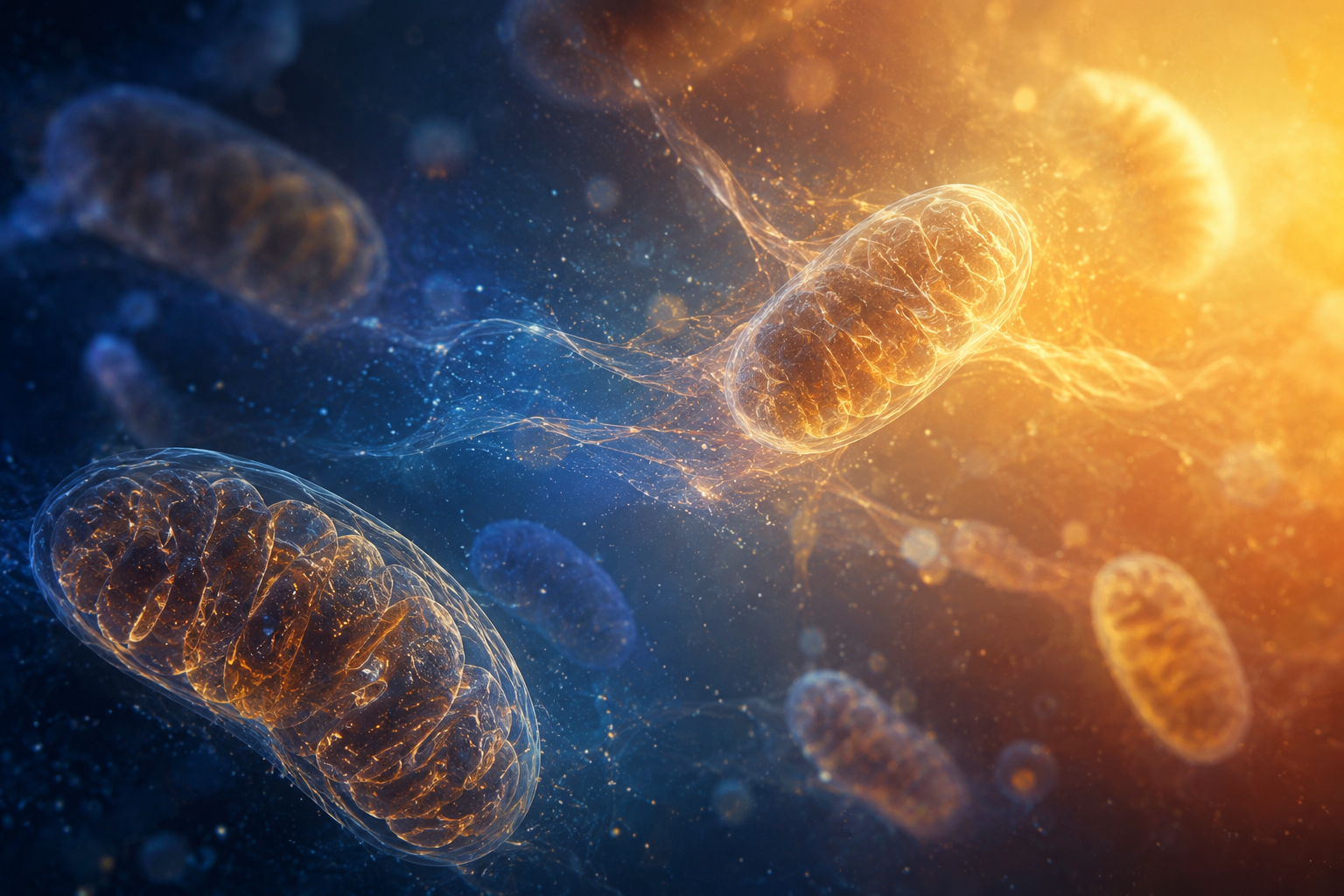
Why this matters for headaches and not just sleep: melatonin is not merely a "sleep hormone." It's one of the most potent, broad-spectrum antioxidants identified in mammalian physiology. Since its free radical scavenging properties were first characterized in 1993, melatonin has been shown to directly neutralize hydroxyl radical, peroxynitrite, and other reactive oxygen and nitrogen species; to stimulate glutathione peroxidase and superoxide dismutase; and, critically, to concentrate specifically inside mitochondria, where it appears positioned to intercept free radicals at their point of origin in the electron transport chain. Melatonin also supports electron flow through the respiratory complexes and improves oxidative phosphorylation efficiency.
Put plainly: every night you suppress your own melatonin with a screen, you are suppressing your primary intracellular mitochondrial antioxidant, right at the organelle generating the free radicals. This is not a once-off event. It's a nightly redox tax, compounding.
This is the pivot point. Chronic mitochondrial oxidative stress from blunted nocturnal melatonin doesn't stay contained to "sleep quality." It cascades into every system discussed below, because every one of those systems has energy-hungry, redox-sensitive components.
The Cascade: Downstream Consequences, Not Independent Drivers
Gut and Serotonin
About 90% of the body's serotonin is synthesized peripherally by enterochromaffin cells in the gut, not in the brain: the central and peripheral serotonin pools are functionally separate and don't cross the blood-brain barrier. But central and peripheral serotonergic signaling both interact with the trigeminovascular system, and serotonergic dysregulation is mechanistically tied to CGRP release and vascular tone changes seen in migraine.
Maintaining the intestinal barrier (tight junction integrity, mucosal turnover, enterocyte renewal) is one of the most energy-expensive processes in the body. Mitochondrial redox stress in enterocytes plausibly compromises barrier integrity, and a compromised barrier is a well-established upstream contributor to systemic inflammatory tone. This is a mechanistically coherent link, though I want to be precise: the direct chain from "evening screen time" to "enterocyte ATP deficit" to "serotonin dysregulation" is a plausible, not yet directly proven, pathway in humans.
Related: your gut may run on light and rhythm more than probiotics → read here.
H. pylori
This one has real epidemiological weight, not just theory. A 2014 meta-analysis of five case-control studies found H. pylori infection significantly more prevalent in migraineurs than controls (44.97% vs 33.26%, OR 1.92, 95% CI 1.05–3.51). A more recent 2023 systematic review across nearly half a million individuals found an even stronger association (OR 2.80, 95% CI 1.75–4.48). Eradication has been associated with reduced migraine burden in several of the included studies, though causality and mechanism remain unsettled: proposed pathways include chronic low-grade gastric inflammation, altered gastrin/nitric oxide signaling, and molecular mimicry. Clinically, I treat H. pylori as a legitimate item on the differential for any patient with recurrent headache and unexplored GI symptoms, not a definitive driver in isolation but a testable one with real supporting data.
Histamine
Diamine oxidase (DAO) is the primary enzyme responsible for degrading extracellular histamine, concentrated in intestinal and renal tissue. It's a copper-dependent cuproenzyme that also requires vitamin B6 (P5P) and FAD (B2) as cofactors. DAO deficiency, whether from genetic AOC1 variants, cofactor insufficiency, alcohol (a direct DAO inhibitor), NSAID-related villus damage, or intestinal inflammation, leads to histamine accumulation and a symptom picture that overlaps heavily with migraine: headache, flushing, GI upset. Enterocyte DAO production requires healthy, well-turned-over mucosal tissue, connecting this back to the same energy-demanding gut maintenance discussed above. This is a case where gut dysbiosis, mitochondrial stress, and histamine intolerance aren't three separate drivers: they're one interconnected terrain.
Related: histamine is more than an allergy signal, and where it comes from matters → read here.
Liver
Phase I cytochrome P450 detoxification is NADPH- and oxygen-dependent, a mitochondrially and metabolically expensive process. Hepatic clearance capacity for histamine and estrogen governs a huge portion of hormonally-patterned and dietary-triggered headache presentations. A liver operating under energy constraint clears these compounds more slowly, extending their circulating half-life and downstream symptom burden.
Cortisol
Evening blue light exposure doesn't just suppress melatonin. It also shifts the timing of the cortisol curve, since the SCN governs both hormones in coordinated antiphase. A flattened or phase-shifted cortisol rhythm is associated with altered pain thresholds and is a well-documented trigger for "weekend migraine" and cortisol-withdrawal headache patterns, exactly the Saturday pattern Sarah described. Glucocorticoid receptors are present on mitochondria themselves, making cortisol dysregulation both a cause and consequence of the same redox disturbance.
Related: the same rhythm problem is often behind waking up tired and inflamed → read here.
The Structural Convergence Point: Sternocleidomastoid
The trigeminocervical complex, where trigeminal nerve afferents converge with upper cervical (C1–C3) afferents in the brainstem, is the final common pathway where all of this metabolic noise gets translated into the sensation of head pain. This is also where structural input enters the picture.

Myofascial trigger points in the sternocleidomastoid have a well-documented referral pattern into the fronto-temporal region, periorbital area, and forehead, a pattern clinicians have described since Travell and Simons' original work, and confirmed in more recent cross-sectional and case-report literature specifically identifying SCM trigger points as a primary, correctable source of chronic headache. Because the trigeminocervical nucleus doesn't distinguish the source of nociceptive input, cervical or trigeminal, a taut, irritated SCM can independently trigger or amplify a headache regardless of what's happening metabolically. It's not competing with the mitochondrial story; it's the mechanical entry point into the same convergence circuit.
The Bioenergetic Rescue: CO2, the Bohr Effect, and Bicarbonate
Here's where physics and physiology meet directly, and where I want to be precise about what's settled science versus applied clinical strategy.
Established biochemistry: The Bohr effect describes hemoglobin's oxygen affinity as inversely related to CO2 concentration and pH. As metabolically active tissue produces CO2, local pH drops, hemoglobin's oxygen affinity decreases, and oxygen is released more readily into that tissue, a right-shift of the oxyhemoglobin dissociation curve, precisely tuned to deliver oxygen where metabolic demand is highest. The reverse is equally well established: hypocapnia (low CO2, as occurs with chronic stress-driven overbreathing) left-shifts the curve, impairs oxygen unloading, and independently triggers cerebral vasoconstriction. This is not fringe physiology; it's foundational respiratory science dating to Bohr, Hasselbalch, and Krogh's original 1904 work, and it's directly relevant to a stressed, shallow-breathing patient whose brain tissue is chronically undersupplied with oxygen despite normal blood oxygen saturation on a pulse oximeter.
The clinical extension (Kruse framework): Sodium bicarbonate supplementation raises systemic buffering capacity and blood bicarbonate reserve, supporting the body's tolerance for higher functional CO2 levels without triggering the hyperventilation reflex. In practice, I use this alongside CO2 tolerance / functional breath training (extended exhale, nasal breathing, breath-hold tolerance work) rather than bicarbonate in isolation: the goal is to retrain a patient's breathing pattern away from chronic hypocapnia so the Bohr effect can do its job of delivering oxygen to metabolically starved cerebral tissue, including the mitochondria driving the entire cascade above. Timing and dosing are individualized; I do not recommend self-titrating bicarbonate without clinical guidance, particularly in patients on diuretics, with renal impairment, or with hypertension.
Back to Sarah
Her workup, sequenced in this order:
Circadian/light history first: she was on screens until 11pm most nights, no blue-light mitigation, minimal morning outdoor light exposure. This became the keystone intervention: blue-light blocking after sunset, morning light exposure within 30 minutes of waking, screens off 90 minutes before bed.
Gut and H. pylori screen: positive for H. pylori, treated per standard protocol.
SCM palpation: active trigger points bilaterally, worse on the side of her habitual phone-cradling posture during calls. Addressed with manual release and postural correction.
CO2 tolerance / breath retraining, with a short bicarbonate trial layered in during the most symptomatic weeks.
The 2pm headache resolved within three weeks of the light intervention alone, before the H. pylori treatment had even finished. The Saturday migraines took longer, tracking more closely with the cortisol-rhythm normalization from consistent light timing across the full week, weekends included. This is the pattern I see clinically far more often than a single "fix": the light intervention doesn't cure everything, but it lowers the baseline redox burden enough that the other, more targeted interventions finally have room to work.
Clinical Synthesis: A Sequencing Framework
When a patient presents with a headache pattern that has resisted standard care, I now start here, in this order:
Light exposure history: timing of screen use, blue-light mitigation, morning outdoor light, weekday/weekend consistency
Circadian/redox markers: cortisol curve, sleep architecture if available, DUTCH panel where indicated
Gut terrain: H. pylori, DAO/histamine load, dysbiosis markers
Structural screen: SCM, upper trapezius, suboccipital palpation
Bioenergetic support: breath retraining, bicarbonate trial where appropriate
The temporal pattern of a headache (when it hits, how it builds across a week, what happens on the one day the routine changes) is diagnostic information most workups never ask for. It's often the fastest route to the real driver.
If this framework resonates with what you're experiencing, it's worth a conversation. And if you want to go deeper into the mitochondrial and circadian science behind this, the same material I teach in-depth in my upcoming course work, keep an eye on future newsletters.
Frequently Asked Questions About Headaches and Your Body Clock
-
Evening blue light can contribute to headaches indirectly. It suppresses melatonin, a key mitochondrial antioxidant, which raises oxidative stress in energy-hungry tissues. Over time this lowers the threshold at which the headache system fires. The link is mechanistically strong, though light is usually one contributor among several, not a sole cause.
-
A headache that keeps a predictable schedule often points to a timing problem rather than a single organ issue. The body's master clock, set largely by light exposure, governs melatonin and cortisol rhythms that influence pain thresholds. Disrupted light timing, especially screens after dark, is a common and testable driver.
-
Research suggests an association. A 2023 systematic review across nearly half a million people found H. pylori infection more common in people with migraine, and eradication has been linked to reduced migraine burden in several studies. Causation is not settled, but it is a reasonable item to test in recurrent headache with GI symptoms.
-
It is a framing rather than a formal diagnosis. It describes headaches that trace back to strained cellular energy production. The brain uses about 20% of the body's energy with almost no reserve, so when mitochondrial output or redox balance falters, the headache system is often the first place the alarm sounds.

Does your headache keep a schedule?
If your headaches keep a schedule and standard care hasn't touched them, the pattern itself is often the fastest route to what's driving it. Book a 1:1 with Dr. Benjamin Snider, ND to map your headache pattern and the root cause behind it.
Disclaimer: This article is for educational purposes only and is not intended to replace individualized medical advice. Please consult your healthcare provider with any questions related to your health or a medical condition.