PCOS Is Now PMOS: What the New Name Means
For years, women with this condition were told it came down to their ovaries, when the science was always bigger than that.
In 2026, the name has finally caught up.
If you’ve been diagnosed with PCOS, you have likely heard the name is changing. Here is what the shift to PMOS means, why it happened, and what it changes about the care you deserve.

Polycystic ovarian syndrome (PCOS) was officially renamed polyendocrine metabolic ovarian syndrome (PMOS) in 2026 following an international consensus process involving patients, researchers, and healthcare organizations worldwide. This updated terminology better reflects the full-body nature of the condition and the wide range of symptoms people may experience.
Why Was PCOS Renamed PMOS?
This name change matters because the term “PCOS” can be misleading. It suggested the condition was mainly about ovarian cysts, when in reality many people with PMOS do not have polycystic ovaries on ultrasound at all. Additionally, the structures commonly described as “cysts” are actually immature follicles rather than true ovarian cysts.
The name itself had become part of the problem.
How Common Is PMOS?
PMOS affects approximately 1 in every 8 reproductive-aged women. Although it is very common, many people still go undiagnosed or misunderstood because their symptoms do not always fit the classic “polycystic ovary” presentation. This narrow focus on the ovaries may have contributed to missed diagnoses, delayed care, and many women feeling dismissed when they did not fit the typical presentation.
The shift to PMOS helps better reflect the complexity of the condition. It is not only about reproduction or the ovaries, but a broader endocrine and metabolic condition that can affect multiple systems throughout the body.
What Does Each Part Of “PMOS” Mean?
The new name helps explain the condition more accurately by highlighting the different systems involved.
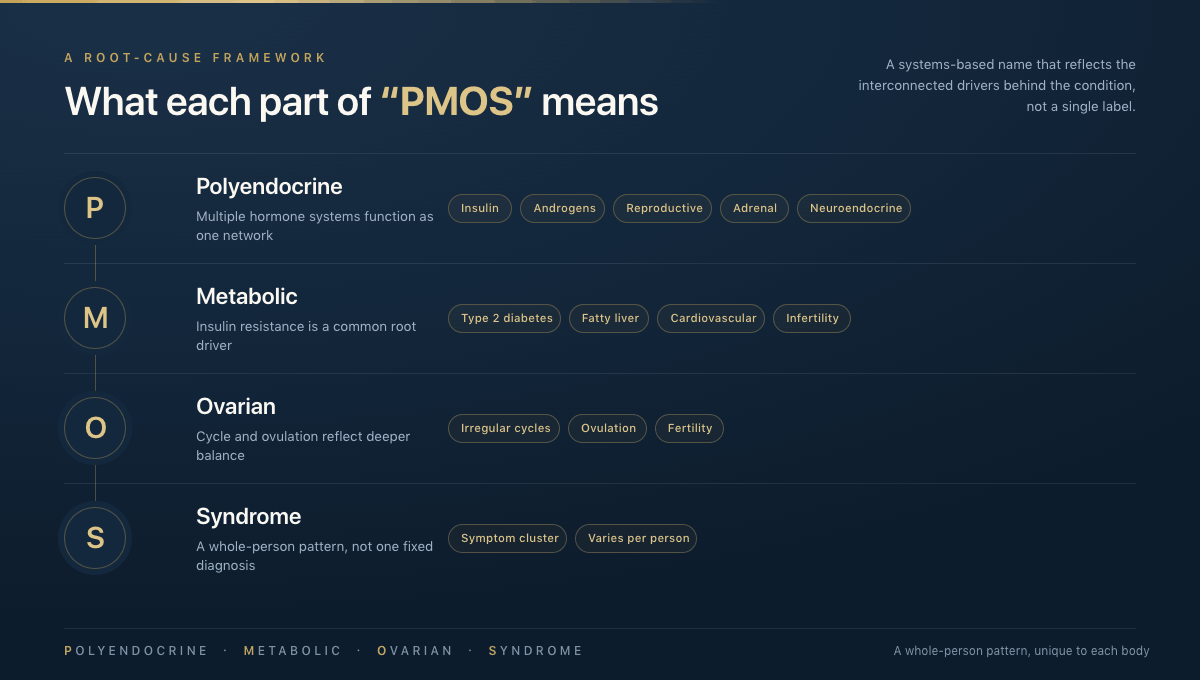
Polyendocrine means multiple hormone systems may be involved, including insulin, androgens, reproductive hormones, adrenal hormones, and neuroendocrine pathways.
Metabolic highlights the important role of insulin resistance and metabolic health. While not every person with PMOS has insulin resistance, it is one of the most common underlying drivers and may increase the risk of conditions such as type 2 diabetes, fatty liver disease, cardiovascular disease, and infertility.
Read more on how we assess metabolic and mitochondrial health with InBody scans.
Ovarian acknowledges irregular menstrual cycles, changes in ovulation, and fertility-related changes that are commonly seen with the condition.
If irregular cycles are part of your picture, read more on what your period is telling you about hormonal balance.
Syndrome means it is a cluster of symptoms and physiological changes, rather than one fixed diagnosis that looks the same in everyone.
Overall, the change from PCOS to PMOS shifts the conversation away from “a condition about ovarian cysts” toward a more complete understanding of it as a whole-body hormonal and metabolic syndrome. This updated terminology may help more people recognize their symptoms, feel validated in their experience, and receive care that reflects the full impact of the condition.
What Are The Symptoms Of PMOS?
If you are struggling with symptoms such as irregular cycles, acne, male pattern hair growth, hair loss, weight changes, fatigue, infertility, insulin resistance, or difficulty feeling like yourself, it is important to know that PMOS is highly individualized and often requires a comprehensive approach.
If fatigue is one of your main symptoms, read more on the cortisol rhythm behind morning tiredness.
Because PMOS touches several systems at once, two women with the same diagnosis can look nothing alike. That is a large part of why it has been missed for so long.
If that list feels familiar, this is exactly the kind of picture I help people sort through. You can book a consultation here whenever you are ready.
What Does The Name Change Mean For Diagnosis And Care?
In naturopathic and functional medicine, this is not new thinking. The whole body has always been the starting point.
At FMU, I take an evidence-based and root-cause focused approach to PMOS by looking at factors such as blood sugar regulation, hormones, inflammation, gut health, stress, nutrition, sleep, and lifestyle patterns. Comprehensive testing and individualized treatment plans can help identify the specific drivers contributing to symptoms and support long-term hormonal and metabolic health.
What should you do if you were already diagnosed with PCOS?

If you were diagnosed with PCOS, nothing about your body has changed. You have the same condition you had last week, with a name that finally describes it more accurately. There is no need to start over or worry that the update undoes anything.
What the new name offers is a useful prompt. Because PMOS reaches across several systems, it helps to understand your own version of it. Notice which pieces show up for you, whether that is your cycle, your skin, your weight, your energy, or your mood, and how they connect. Two people with the same diagnosis rarely have the same story.
It is also a fair moment to ask whether your care is looking at the whole picture. If your PMOS has only ever been addressed through your reproductive health, the metabolic and hormonal side may be worth revisiting. The most useful next step is care that treats you as an individual, not a label.
Frequently Asked Questions About PMOS
-
Yes, and nothing about your body changed when the name did. It is the same condition you have always had, finally described more accurately.
-
In most cases, not the way the old name implied. What shows up on an ultrasound are immature follicles rather than true cysts, and plenty of people with PMOS have ovaries that look completely typical on a scan.
-
No. Your diagnosis stands and your care does not reset. What the new name invites is a fair question to bring to your practitioner: is my care actually looking at the whole picture, or just my ovaries?
-
Those can be useful tools, and a good plan never takes options off the table. The difference with a root-cause approach is that it also asks why your hormones or blood sugar are behaving this way and works on those drivers directly, through nutrition, targeted testing, and lifestyle. For many people, medication becomes one choice among several rather than the only one offered.
-
Beyond a standard panel, a functional workup might look at insulin and blood sugar markers, a full hormone picture, thyroid, inflammation, and nutrient status, depending on your symptoms. The point is not more testing for its own sake, but the right testing to find your specific drivers. That is what turns a label into a plan you can act on.

Ready for Care That Looks at the Whole Picture?
PCOS, now PMOS, is one of the conditions I work with most, and it rarely looks the same in any two people. That is exactly why a name on a chart only tells part of the story.
If something here resonated and you are ready to stop guessing about what is going on in your body, let's talk. Book a consultation with me here
Disclaimer: This article is for educational purposes only and is not intended to replace individualized medical advice. Please consult your healthcare provider with any questions related to your health or a medical condition.